
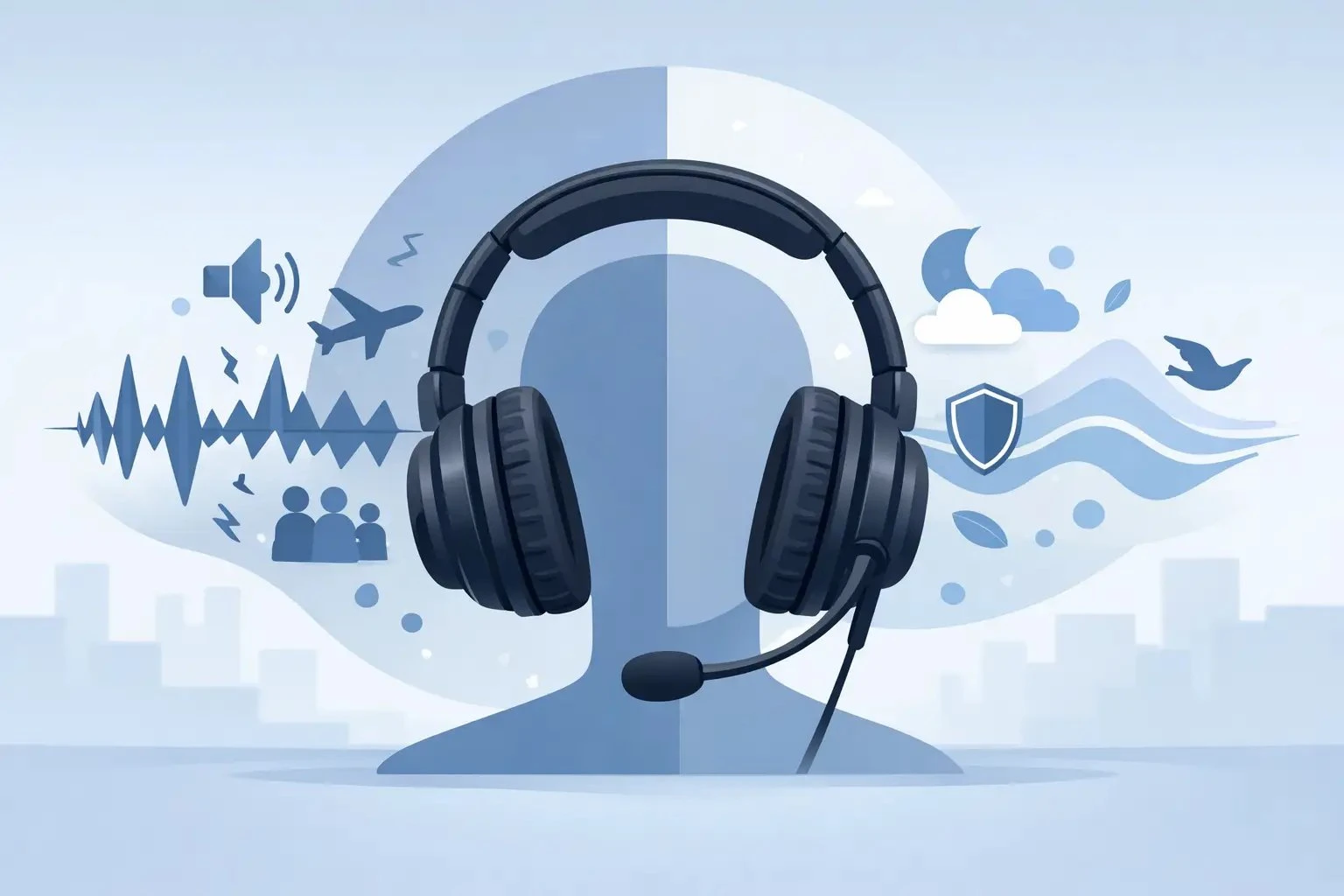
Double Ear Headset Noise Isolation Explained
Posted by Tech Support @ Telephoneheadsets.net on 18th Oct 2026
If your team is taking calls in an open-plan office, a reception desk or a busy contact centre, background noise is not a small annoyance - it directly affects concentration, call accuracy and fatigue. That is where double ear headset noise isolation becomes a practical buying consideration rather than a nice extra. A duo headset can help staff focus on the caller, hear detail more clearly and work with fewer distractions over the course of a full shift.
For business buyers, the key point is that noise isolation is not the same as active noise cancellation, and it is not purely about sound quality either. In telephony environments, it is about how effectively a headset reduces surrounding office noise reaching the user’s ears while still remaining comfortable, compatible and suitable for the phone system in use.
What double ear headset noise isolation actually means
A double ear headset, also called a duo headset, uses two speakers rather than one. That basic design immediately gives it an advantage in noisier workplaces because both ears are covered or partially covered, which helps block external sound. The amount of isolation depends on the ear cushion material, the way the headset sits on the head, and whether the speakers rest on the ear or around it.
In a business setting, this matters because users are often listening for speech detail rather than music. They need to catch names, numbers, addresses and instructions the first time. With a mono headset, one ear remains open to the room, which can be useful for some roles. With a double ear model, the user is more insulated from nearby conversations, ringing phones and general office movement.
That does not mean every duo headset creates the same result. Some offer light passive isolation that simply reduces distractions. Others provide a tighter acoustic seal and noticeably stronger separation from the surrounding environment. The right level depends on where the headset will be used and how much awareness of the room the user still needs.
Why double ear headset noise isolation suits busy call environments
In quieter private offices, a mono headset can be perfectly adequate. In shared workspaces, customer service floors and high-call-volume teams, the balance often shifts towards duo models. The reason is simple: staff can focus more consistently when the caller is the dominant sound they hear.
That can improve accuracy on routine tasks such as taking payment details, booking appointments or logging support cases. It can also reduce the strain that comes from mentally filtering out background chatter all day. Buyers often focus on microphone noise-cancelling, and rightly so, because that affects what the caller hears. But earpiece isolation affects what the user hears, which is just as important for productivity.
There is also a training benefit. In many teams, new starters work in noisier shared areas and have not yet developed the same call-handling confidence as experienced staff. A double ear headset with good noise isolation can help them stay focused on the conversation rather than the room around them.
Double ear headset noise isolation versus active noise cancellation
These terms are often grouped together, but they are different. Noise isolation is passive. It comes from the physical design of the headset - the ear cushions, fit and coverage. Active noise cancellation uses electronics to reduce certain external sounds.
For desk phone and business USB headset buying, passive isolation is often the more relevant feature. It is simpler, more common across professional headset ranges and highly effective in speech-focused environments. Active noise cancellation can be useful, but it may increase cost and is not always necessary for office telephony.
This is where buyers should avoid over-specifying. If the main problem is nearby conversations and general office noise, a well-designed double ear headset may solve it without adding complexity. If the environment includes constant low-frequency background sound, such as ventilation or transport noise, active cancellation may be worth considering. It depends on the noise profile, not just the headline feature list.
Fit, cushion type and wearing style matter more than many buyers expect
Two duo headsets can look similar on paper and perform quite differently in use. One of the biggest variables is the ear cushion. Leatherette cushions often give better passive isolation because they create a closer seal against the ear. Foam cushions may feel lighter and cooler for some users, but they usually let in more ambient sound.
Headband tension matters as well. Too loose, and the headset will not isolate effectively. Too tight, and comfort becomes the problem, especially for users wearing it for six to eight hours a day. A headset that isolates well for ten minutes but becomes uncomfortable by lunch is not a good business purchase.
Wearing style is another factor. Some business headsets sit directly on the ear, while others are designed for fuller coverage. In telephony, on-ear duo models are common because they balance compact design with practical isolation. Still, buyers should not assume that all double ear options suit all users equally. Teams with long call durations may prioritise lower clamping force and lighter materials, even if that means slightly less isolation.
Compatibility still comes first
Even when double ear headset noise isolation is the main requirement, compatibility remains the first checkpoint. A headset that blocks office noise well is of limited value if it does not match the user’s desk phone, softphone or connection type.
Business buyers usually need to confirm whether the headset is required for USB, RJ9, RJ11 or a specific desk phone interface. They may also need to check whether a bottom lead, amplifier or USB adapter is required. This is especially important in mixed estates where some staff are on IP desk phones and others handle calls through a PC-based platform.
That is why category-led buying by phone brand and model is often the safest route. It reduces trial and error and helps ensure that the chosen duo headset is not only suitable for a noisy office but also properly matched to the communications setup. For organisations managing multiple endpoints, that procurement accuracy saves more time than chasing minor headline features.
When a mono headset may still be the better choice
Duo headsets are not automatically right for every role. In some office environments, users need to remain more aware of colleagues, doorbells, tannoy announcements or face-to-face visitors. Reception staff, supervisors and users in collaborative spaces may prefer a mono model because it keeps one ear open to the room.
There is also personal preference. Some users simply do not like feeling acoustically closed off. Others may experience fatigue if they are isolated from their surroundings for long periods. In these cases, forcing a double ear design across the whole team may not produce the best result.
A sensible approach is to match the headset type to the task. High-focus call handling, heavy customer service work and noisy shared floors often justify a duo model. More mixed duties may not. It depends on how calls fit into the working day, not just on office noise alone.
What to check before buying for a team
For a single user, personal preference can play a larger part. For a team purchase, consistency and supportability matter more. Start by assessing the call environment, then the connection type, then the wearing requirements. If users are in a noisy office and spend most of the day on calls, double ear headset noise isolation should be near the top of the shortlist criteria.
After that, check whether the headset has the right microphone type for your environment, whether it is intended for all-day use, and whether replacement cushions or accessories are available. Procurement teams often overlook maintainability, but it matters when deploying headsets at scale.
It is also worth thinking about standardisation. If one department uses Cisco desk phones, another uses Avaya handsets and a third uses USB softphones, you may need a family of compatible headset options rather than one exact model for everyone. A specialist supplier such as TelephoneHeadsets.net can make that process easier by narrowing options around the actual phone or platform in use.
The practical value is focus
The best reason to choose a duo headset is not that it sounds more impressive on a specification sheet. It is that it helps users focus on the call in front of them. In business telephony, that translates into fewer repeats, less listening effort and a more controlled working environment for the person wearing it.
If your users are struggling to hear clearly because the office is doing what offices do - phones ringing, colleagues speaking, people moving about - better noise isolation is often the straightforward fix. Get the compatibility right, choose a fit suited to long shifts, and the headset becomes less of an accessory and more of a reliable part of the call-handling setup.